
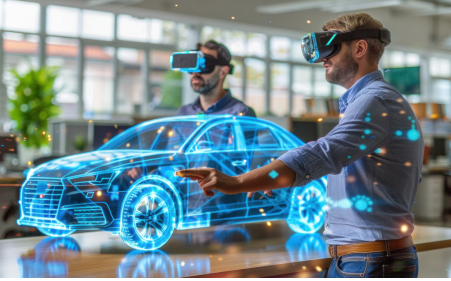

























The automotive industry is undergoing a profound transformation, fueled by rapid advancements in embedded systems and software technologies. Modern vehicles are no longer just mechanical machines—they are intelligent, software-driven platforms designed to deliver safety, connectivity, performance, and user experience. At the heart of this evolution lies innovation in automotive embedded systems.
The Rise of Software-Defined Vehicles
The concept of software-defined vehicles (SDVs) is redefining how automobiles are designed, built, and updated. Traditionally, vehicle functionality was tightly coupled with hardware. Today, embedded systems enable decoupling of software from hardware, allowing features to be added, updated, or enhanced over time.
This shift is driven by:
- Increasing demand for connected and autonomous features
- The need for over-the-air (OTA) updates
- Growing emphasis on vehicle personalization and digital experiences
Embedded systems serve as the backbone of these capabilities, managing everything from engine control and infotainment to advanced driver assistance systems (ADAS).
Key Areas of Innovation
1. Advanced Electronic Control Units (ECUs)
Modern vehicles can contain 100+ ECUs, each responsible for specific functions. Innovation in embedded systems has led to:
- Domain and zonal architectures that reduce complexity
- High-performance computing platforms consolidating multiple functions
- Improved communication protocols like CAN FD and Automotive Ethernet
These advancements enable faster data processing, improved scalability, and reduced wiring complexity.
2. High-Performance Bootloaders and Flashing
One of the critical components of automotive embedded systems is the bootloader, which facilitates secure and efficient software updates.
Modern innovations include:
- Parallel flashing mechanisms for faster ECU updates
- Support for multi-channel communication (CAN, CAN FD, Ethernet)
- Integration of secure boot and cryptographic validation
- Fail-safe mechanisms like A/B swapping and rollback
These enhancements significantly reduce downtime and ensure reliability in production environments.
3. Functional Safety and Cybersecurity
As vehicles become more connected, ensuring safety and security is paramount. Embedded systems are designed in compliance with:
- ISO 26262 for functional safety
- ISO/SAE 21434 for automotive cybersecurity
Key innovations include:
- Hardware Security Modules (HSMs)
- Secure communication protocols
- Encryption and authentication mechanisms (AES, RSA, SHA)
These technologies help protect vehicles from cyber threats while ensuring safe operation.
4. Connectivity and Communication
Embedded systems enable seamless communication both within the vehicle and with external systems. Innovations include:
- Vehicle-to-Everything (V2X) communication
- Integration with cloud platforms
- Real-time data exchange via Automotive Ethernet
This connectivity supports features like remote diagnostics, fleet management, and intelligent traffic systems.
5. AI and Edge Computing
The integration of AI and machine learning into embedded systems is transforming vehicle intelligence. From object detection in ADAS to predictive maintenance, AI-driven embedded solutions enable:
- Faster decision-making at the edge
- Reduced dependency on cloud processing
- Enhanced driving safety and automation
Challenges in Automotive Embedded Innovation
Despite significant advancements, the industry faces several challenges:
- System complexity due to increasing software content
- Real-time performance constraints
- Ensuring interoperability across platforms
- Maintaining security across connected ecosystems
- Managing OTA updates reliably and safely
Addressing these challenges requires a combination of robust architecture, standardized protocols, and continuous innovation.
The Role of Standardization
Standards play a crucial role in driving innovation while maintaining interoperability. Protocols like:
- UDS (ISO 14229) for diagnostics
- AUTOSAR for software architecture
- DoIP (Diagnostics over IP)
ensure that embedded systems can work seamlessly across different OEMs and suppliers.
Standardization not only accelerates development but also fosters collaboration across the ecosystem.
The Road Ahead
The future of automotive embedded systems is centered around:
- Centralized computing architectures
- Software-driven innovation cycles
- Autonomous and electric vehicle technologies
- Enhanced user-centric experiences
As vehicles continue to evolve, embedded systems will play a critical role in enabling smarter, safer, and more connected mobility solutions.
Conclusion
Innovation in automotive embedded systems is at the core of the industry’s digital transformation. From high-performance bootloaders and secure communication protocols to AI-driven intelligence and cloud connectivity, embedded technologies are reshaping the way vehicles operate and interact with the world.
Organizations that invest in scalable, secure, and high-performance embedded solutions will be better positioned to lead in the era of software-defined mobility.