AVIN Systems is the home for automotive embedded software products and services specializing in AUTOSAR, E-E architecture, SDV, Advanced Driver Assistance System (ADAS), Electric Vehicle and Cloud Technologies.
AVIN Systems is the home for automotive embedded software products and services specializing in AUTOSAR, E-E architecture, SDV, Advanced Driver Assistance System (ADAS), Electric Vehicle and Cloud Technologies.
AVIN Systems delivers QNX and Linux BSP development with ASIL‑D safety support and ASPICE-based development process. Our services include peripheral device driver development, external device driver development and middleware integration for leading automotive High-Performance Computing (HPC) controllers and SOCs.
What Is the AGNOSAR® Classic Platform? The AGNOSAR® Classic Platform is a comprehensive AUTOSAR Classic Basic Software (BSW) stack developed by AVIN Systems. It adheres to AUTOSAR R4.x specifications and provides a standardized software foundation that enables seamless communication between hardware, operating systems, and application software components. [avinsystems.com] Built on modular architecture principles, the platform […]
The automotive industry is undergoing a rapid digital transformation, driven by the growing demand for smarter, safer, and more connected vehicles. At the heart of this evolution lies automotive embedded software, enabling advanced functionality across safety, performance, infotainment, and autonomous systems. As vehicles increasingly become software‑defined, embedded systems play a critical role in shaping the […]
Key Trends Shaping Automotive Embedded Systems Several emerging trends are redefining automotive embedded software development: Software‑Defined Vehicles (SDVs): Vehicles are transitioning toward a centralized software architecture, allowing features to be updated and enhanced through over‑the‑air (OTA) updates. This approach improves flexibility, reduces hardware dependency, and enables continuous innovation. Advanced Safety and ADAS: Embedded systems are […]
Challenges in Automotive Embedded Software Development Despite rapid advancements, automotive embedded development presents several challenges: Managing increasing system complexity Ensuring functional safety and regulatory compliance Meeting real‑time performance constraints Maintaining long‑term reliability and scalability Integrating hardware and software across diverse platforms Addressing these challenges requires deep domain expertise, robust development processes, and a strong focus […]
AVIN Systems’ Approach to Embedded Software Excellence At AVIN Systems, innovation and engineering excellence are at the core of automotive embedded software development. With expertise spanning the entire software lifecycle, AVIN delivers reliable, scalable, and standards‑compliant solutions tailored to the evolving needs of global automotive clients. Key strengths include: End‑to‑end embedded software development and integration […]
Automotive embedded software development demands a structured and disciplined engineering approach. From requirements analysis to system design, coding, integration, and validation, every stage must align with strict automotive standards and quality expectations. A well‑defined development lifecycle ensures: Predictable performance and system stability Early identification of risks and defects Compliance with automotive regulations and safety norms […]
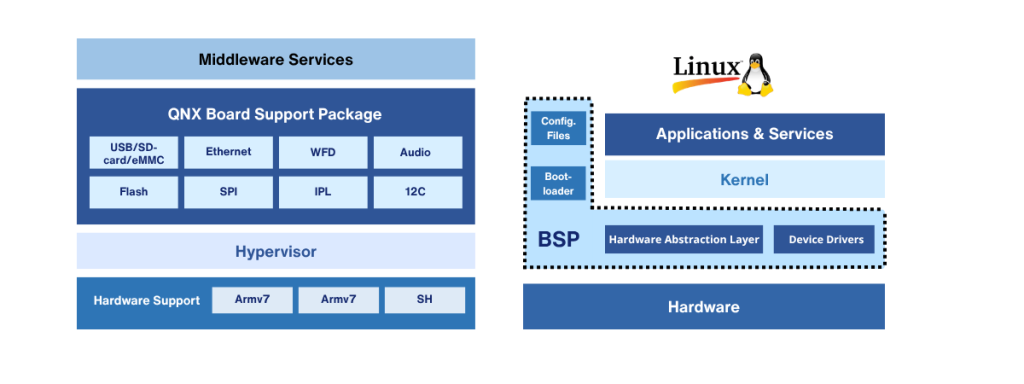
A Board Support Package (BSP) is a collection of software components that provides an interface between the operating system (OS) and the hardware platform. It includes device drivers, bootloaders, initialization code, and configuration files needed to run an OS on a specific hardware board.
BSP Development ensures that the OS and application software can communicate effectively with the hardware. It provides hardware abstraction, accelerates application development, and ensures system stability and performance.
Typical BSP development services include:
Bootloader design and development.
Hardware initialization and configuration.
Device driver development for peripherals (sensors, communication modules, memory, etc.)
OS porting and adaptation.
HAL (Hardware Abstraction Layer) integration.
Testing, validation, and optimization.
We provide BSP development for a wide range of operating systems, including:
AUTOSAR OS (Classic & Adaptive).
Real-Time Operating Systems (RTOS).
Linux-based embedded systems.
Custom OS solutions for automotive ECUs.
Yes. BSP is tailored to the specific hardware architecture, microcontroller, or ECU platform, ensuring optimal performance and compatibility with the system design requirements.
By providing a ready-to-use, stable interface between hardware and software, BSP development allows application developers to focus on higher-level software functionality, reducing development and testing cycles.
Yes. BSPs can be developed in compliance with ISO 26262 (functional safety) and ISO/SAE 21434 (cybersecurity) guidelines, ensuring safe and secure operation of automotive ECUs.
Yes. BSPs can be designed to support multiple hardware variants with minimal modifications, improving portability and scalability across different vehicle platforms.
Yes. We provide maintenance, updates for new hardware revisions, performance tuning, and troubleshooting support for long-term sustainability.
Automotive OEMs, Tier-1 suppliers, and embedded software development teams that need reliable hardware-software integration, faster ECU development, and support for multiple platforms.
Enable next-gen SDV platforms with AVIN
Partner with AVIN to advance Software‑Defined Vehicles through intelligent architectures and trusted engineering expertise.
Crafting the intelligence that defines the next era of vehicles
Bridging premium software engineering with the future of vehicle platforms